



Have you ever looked at your bank account and wondered where all your money disappears? Budgeting isn’t about taking away your fun, it's about giving each dollar a clear job. Imagine your income like a team where every dollar has a role, whether it’s paying a bill or stashing cash for a rainy day. In this guide, I’ll walk you through simple steps to organize your money and decide who gets what. When you take control of your spending, smart savings and less financial stress can follow.
Step-by-Step Guide to Budgeting Your Finances
Begin by writing down your net monthly income. This is the money you have left after taxes, retirement contributions, and health insurance premiums. For example, think of Jane checking her bank balance and finding that she has $3,000 available each month.
Next, list out all your expenses. Look at your bank and credit card statements, or simply jot things down in a notebook or spreadsheet. Make sure to include everything, from the regular bills to that daily coffee run, to get a clear picture of your spending.
Then, subtract your total expenses from your net income. This process creates what’s known as a zero-based budget, where every dollar has a specific job. For instance, if you earn $3,000 and spend $2,700, you plan what to do with the remaining money, like saving or paying down debt.
Before you move on to other spending categories, try to set aside 10% of your income for giving. This could mean donating to a charity or helping out a friend in need. It’s a simple step that adds purpose and discipline to your budgeting.
Now, use the “Four Walls” approach to help you divide up your essential expenses, think food, utilities, housing, and transportation. Keeping these costs in check makes sure your basic needs are always covered.
Finally, track your daily transactions throughout the month. Whether you use a smartphone app or maintain simple records, knowing where your money goes is key. At the end of the month, review your spending, adjust as needed, and set up your new budget for the coming month.
Tracking Income and Expenses When You Budget

When you set up your budget, a great idea is to split your spending into two groups: fixed and variable. Fixed costs are those steady payments like your rent or subscription fees, while variable costs, like dining out, groceries, and fuel, can change from month to month.
Take some time to review your bank and credit-card statements. It doesn't matter whether you're using an app or a simple spreadsheet, this process helps you see exactly where your money is headed. For example, I once checked my app and was surprised by how much my daily coffee really added up.
| Fixed Expenses | Variable Expenses |
|---|---|
| Rent or mortgage | Dining out |
| Subscription services | Fuel costs |
By reviewing these categories, you'll find it easier to make adjustments that help your budget work smarter for you.
Comparing Budgeting Methods for How to Budget
Many people like using the 50/30/20 rule because it’s easy to follow. You take your income and split it into three parts: half goes to essentials like rent and bills, 30% for fun things like eating out or hobbies, and the remaining 20% for savings. So, if you bring home $3,000 a month, you’d spend about $1,500 on necessities, $900 on extras, and put $600 aside for later. It’s a clear way to see how your money is divided.
Another well-liked method is the zero-based budget. Here, you give every dollar a role so nothing is left unplanned. For example, out of a $3,000 monthly income, you might set $1,000 for rent, $400 for groceries, $300 for debt payments, and keep assigning amounts until every dollar has a job. This careful planning often helps you avoid unexpected spending.
If you enjoy hands-on control, the cash envelope system might be just right. You put money into separate envelopes for different spending areas. When an envelope runs out, that means you need to stop spending in that category. It’s a practical way to keep impulse buys in check and stay aware of how you use your cash daily.
Then there’s the pay-yourself-first method, which flips the order around by saving money before you take care of other expenses. For instance, from your $3,000 income, you might automatically set aside $300 for retirement and $100 for an emergency fund, then use what’s left for your everyday needs. This way, saving becomes a priority.
For those with higher living costs or lower incomes, tweaking the percentages to a 60/30/10 split might work better. Here, you allocate more to your essentials, a bit less to discretionary spending, and a set portion for savings.
You might also want to consider reverse budgeting if you like the idea of automating how your income is split. This approach lets you set up automatic transfers to different spending areas, making your budgeting even more hands-off. Check it out here: reverse budgeting.
Happy budgeting!
Allocating Funds and Setting Goals in Your Budget
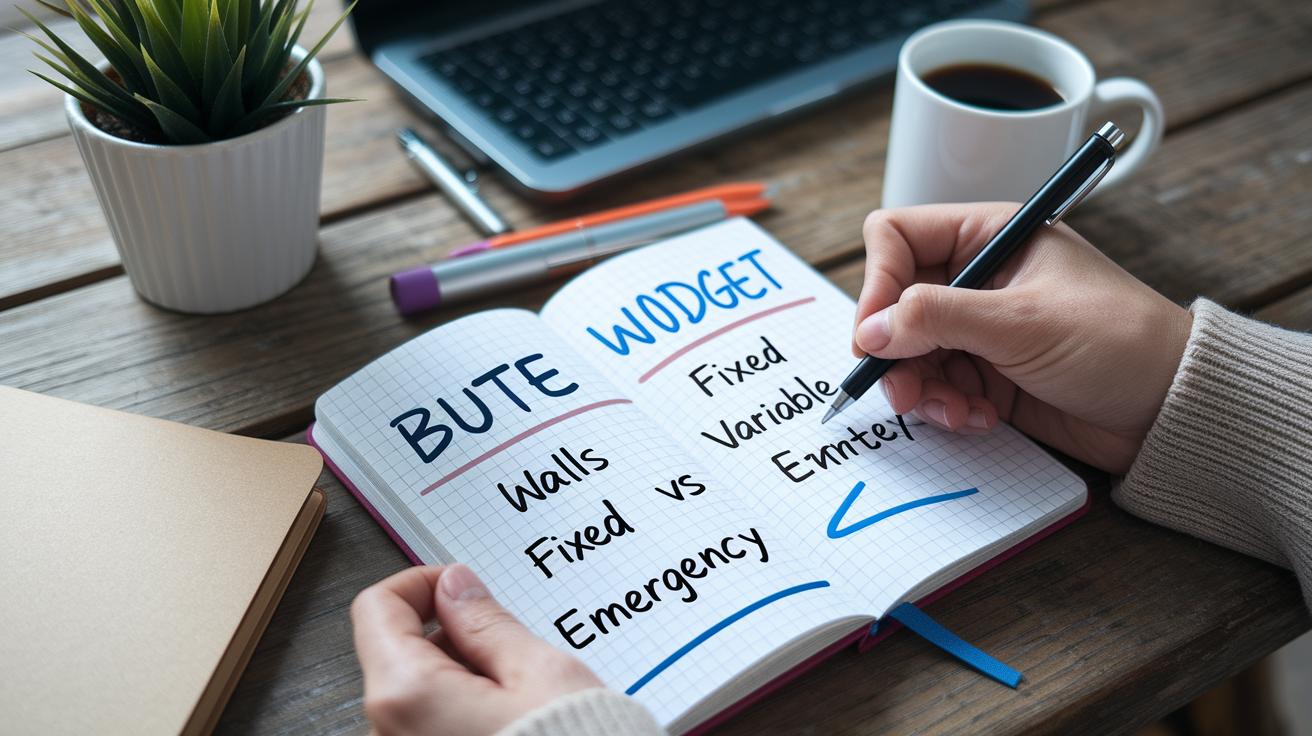
Start by splitting your monthly income into clear sections so you know exactly where your money goes. A good method is the "Four Walls" approach, which covers food, utilities, housing, and transportation. These are the must-pay bills. Then, sort everything else into fixed expenses that stay the same each month (like rent) and variable ones that change (like dinner out).
Next, think about setting up short-term goals you can reach in one to three years. For instance, you might want to build an emergency fund or pay off high-interest credit cards. Picture having three to six months of living expenses tucked away in an easy-to-reach account. This helps you feel ready for surprises. Also, keep long-term goals in mind, things like saving for retirement or a child’s education. If you end up with extra money after paying your bills, put it toward these goals. On the flip side, if your spending is too high, you may need to cut back on non-essential expenses.
- List your must-have fixed expenses.
- Keep an eye on variable costs by tracking them often.
- Set clear, specific goals for both short-term needs and long-term dreams.
Make it a habit to review your budget every month. This way, you can adjust your spending plan as your income or costs change, keeping you on track every step of the way.
Essential Budget Templates and Digital Tools for How to Budget
Free budget templates make it easy to get started. You can download spending outlines or use customizable Excel finance sheets to set up your budget without any fuss. Many of these templates follow the simple 50/30/20 rule, where your take-home pay gets split into needs, wants, and savings, so you always know where your money is going.
There’s also a neat starter calculator that uses your net income to instantly create a spending plan. For instance, a basic Excel sheet might ask you to enter your income and expenses, then show you how much you should set aside for things like rent, food, and other essentials.
Digital tools give budgeting a modern upgrade. Mobile apps can track your spending in real time, which helps you stick to your plan. Apps like EveryDollar even try to spot hidden money in your budget by quickly showing your spending habits. Online budget calculators also use national averages to give you a clearer picture of your spending and savings opportunities.
If you like a hands-on approach, envelope-system worksheets let you physically separate cash for different needs. And if you’re curious about more tips on managing cash flow, check out this resource for more on cash flow budgeting that shows how digital tools can make budgeting smoother.
Reviewing and Adjusting Your Budget over Time

Each month, take a look at your budget and compare what you expected to spend with what actually left your account. Check your bank statements, receipts, or even a budgeting app to spot any differences. It's a simple way to see where you might be spending a bit more or a little less than planned.
When you find areas where you overspent, think about ways to trim those costs. If you catch yourself overspending, give yourself a 24-hour pause before making another purchase. For example, before buying that extra gadget, wait a day to decide if you really need it.
- List moments when your spending went over what you planned.
- Mark any recurring costs that are consistently higher than expected.
- Note where you spent less than planned and consider shifting that money to other needs.
- Update your budget as your income changes or new expenses pop up.
Keeping your reviews simple like this makes it easier to stay on track with your money plan.
Maintaining Your Budget: Emergency Funds and Long-Term Planning
Try to save enough money to cover three to six months of your living expenses. Keep this money in a separate account that you can access easily. Automate your savings by setting up a fixed transfer right after each paycheck, you treat it like a regular bill, making saving feel normal and stress-free.
Also, set up automatic payments for your debt. When you split your paycheck into portions for debt and savings, you make sure both areas get attention. This simple trick helps you stay on top of debts while building a safety net for the future.
| Category | Action |
|---|---|
| Emergency Savings | Automatically transfer funds to build 3-6 months of expenses |
| Debt Payments | Schedule regular payments for steady debt reduction |
Automating these payments frees you up to focus on your overall financial health. It’s a simple and smart way to keep your budget balanced while planning for both the unexpected and long-term goals.
Final Words
In the action of setting up a spending plan, we walked through listing your income, tracking every expense, and choosing a method that fits your style. We broke down each step, from assigning funds for essentials to setting short-term and long-term goals. We also pointed out handy templates and digital tools to keep your plan clear. Follow these steps and learn how to budget so you can take charge of your money and watch your financial future grow. Enjoy moving forward with confidence!
FAQ
How to budget money for beginners and how should a beginner budget?
The budgeting process for beginners starts by listing your net income, recording all expenses, and creating a zero-based plan where every dollar is assigned a purpose. This simple approach helps you manage money effectively.
How to make a monthly budget?
Making a monthly budget involves tallying your net income, tracking all spending through apps or bank statements, then assigning clear amounts to each expense category based on your income.
How to budget money and save?
Budgeting money while saving means you allocate portions to essentials, discretionary costs, and savings, either by using rules like 50/30/20 or customizing your plan to cut expenses and boost savings.
How to budget money on low income?
Budgeting on a low income requires a focus on essentials and limiting nonessential spending. Try a framework that carefully balances fixed expenses with priority savings and makes room for emergency funds.
How to budget and track expenses?
Budgeting and tracking expenses means regularly recording spending using tools like smartphone apps, spreadsheets, or pen and paper, then comparing actual spending to your planned budget for accurate insights.
How to budget for a year?
Budgeting for a year involves projecting monthly income and expenses, considering seasonal changes, and breaking your yearly goal into smaller, manageable monthly budgets for steady financial guidance.
How to use a budget template and what is a personal budget example?
Using a budget template means filling in your income and expense categories in a pre-designed format, similar to a personal budget example where you might allocate portions of a $3,000 income to rent, groceries, debt, and more.
What’s the 50/30/20 budget rule?
The 50/30/20 rule divides your after-tax income into 50% for essentials, 30% for discretionary expenses, and 20% for savings or debt repayments, offering a simple guide for balanced spending.
How to save $10,000 in 3 months?
Saving $10,000 in 3 months means significantly reducing spending while boosting income. This might include cutting nonessential costs and possibly earning extra money to meet such an ambitious savings goal.
What is the $27.40 rule?
The $27.40 rule is a budgeting guideline that helps you pay attention to small, recurring costs; by cutting these out, you can find hidden savings over time that add up significantly.