

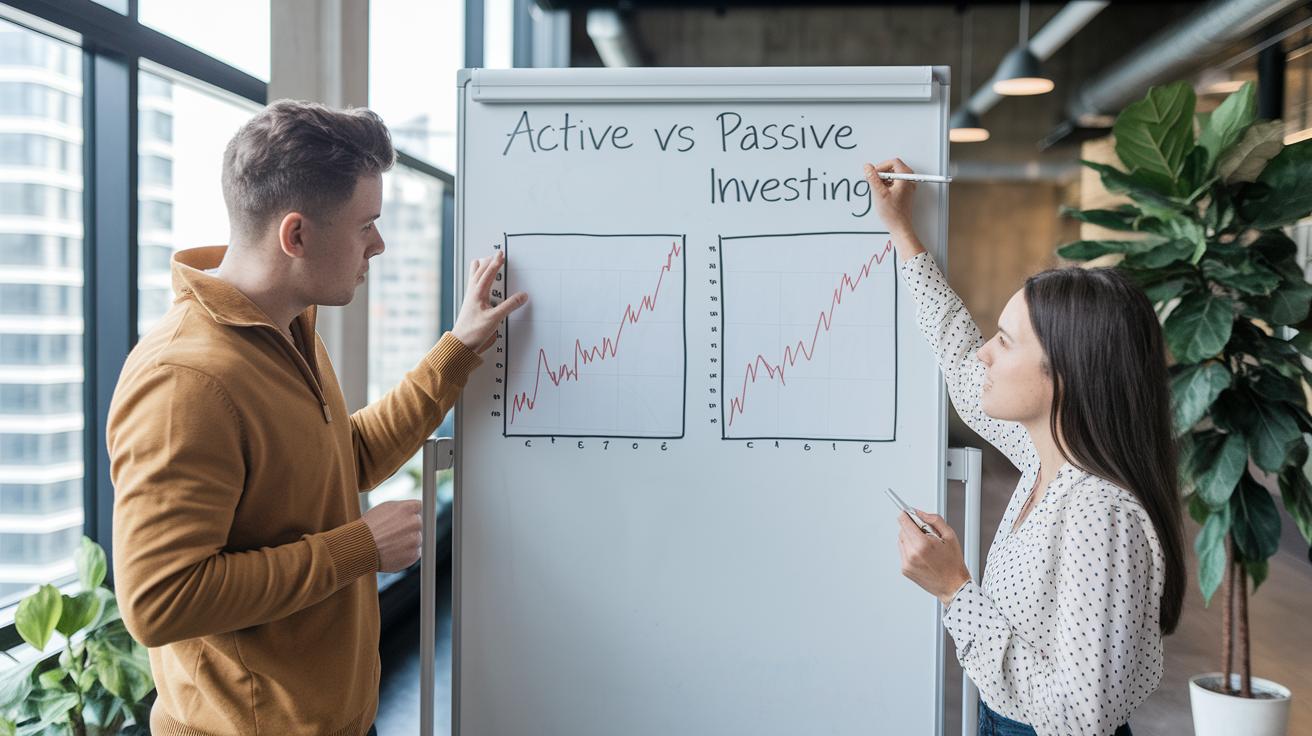

Ever wonder if spending hours checking stock prices beats letting your money grow quietly? Imagine two friends, one who closely watches every market move and another who sets up a solid mix of investments and lets it work on its own. In this article, we weigh the ups and downs of active investing against a calm, hands-off approach. We explain how each way can shape your future finances and help you choose the method that feels right for you.
Active vs Passive Investing: Winning Money Moves
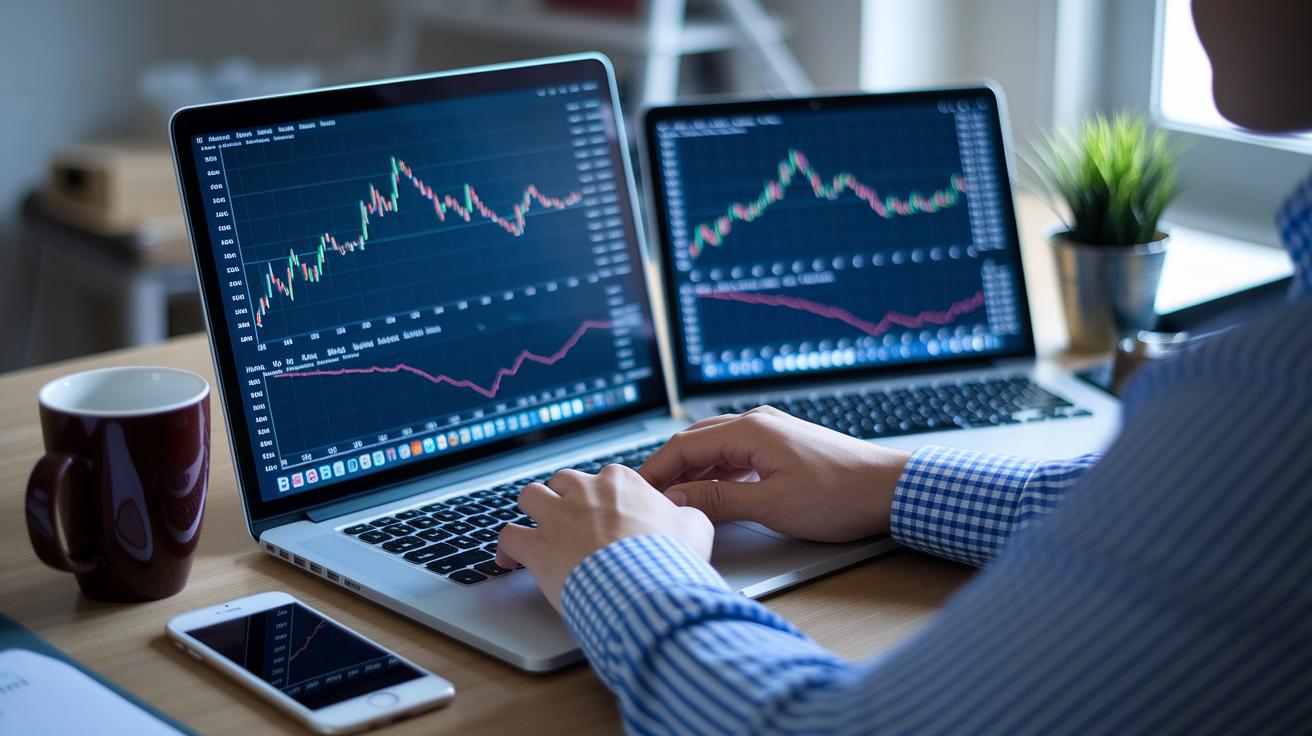
Active investing is all about trying to beat the market by picking specific stocks or timing your trades. It means putting in lots of hours researching and tracking market trends, sometimes up to 10–15 hours a week. For instance, you might spend a Saturday checking out charts and news, only to see one of your favorite stocks take a sudden dip. This hands-on approach often comes with higher fees because you’re buying and selling more frequently.
Passive investing, on the other hand, follows a set-it-and-forget-it approach. With passive investing, you buy index funds, ETFs, or target-date funds that spread your money across hundreds or even thousands of companies. Think of it like mixing 2 to 4 low-cost funds that cover U.S. stocks, international companies, and bonds. It’s as if you’re following a tried-and-true recipe that needs little extra work while keeping your portfolio well-diversified.
The main difference here is the emotional and time commitment. Active investors deal with daily market ups and downs, which can be stressful and require quick decision-making. In contrast, passive investors set their contributions on autopilot and let the power of compound growth work quietly in the background. This side-by-side look shows that while active investing demands a lot of effort and can stir up emotions, passive investing offers a simpler, lower-cost route with broad market exposure.
Active vs Passive Investing: Cost and Fee Comparison

Actively managed mutual funds often charge annual fees of about 1% to 2% of your assets, while index funds and ETFs usually charge much less, around 0.05% to 0.15%. This difference might not seem huge at first, but over a long period, like 50 years, it can cut your potential wealth by more than 60%.
Imagine this: if you choose a fund that charges 2% per year over one that charges only 0.1%, you're paying a lot more each year. That extra cost takes away from your portfolio’s growth, much like a leaky bucket losing water.
Passive investing, on the other hand, relies on low-cost index funds. This means fewer fees, so more of your money stays invested and has a chance to grow. Think of it like choosing a fuel-efficient car, the less you spend on fees, the more you keep for future gains.
Even if active managers work hard to pick the best stocks, those higher fees can easily eat up any extra gains. That’s why many investors turn to trusted providers known for low-cost options, making passive strategies a smart choice for steady, long-term wealth building.
Active vs Passive Investing: Performance Metrics and Historical Trends

When we look at active and passive investing, each tells its own story. Recent studies show that more than 75% of professional fund managers don't beat market benchmarks after fees. In simple terms, this means that even with lots of research and busy trading, many active funds just don’t perform as well as the low-cost, straightforward passive options.
By 2024, passive mutual funds and ETFs really took off. By the first part of 2025, passive assets grew to over $16 trillion, while active assets reached just over $14.1 trillion. This tells us that investors are favoring a strategy that covers the whole market and keeps costs low. In one surprising year, billions moved from high-maintenance active funds to easier passive setups, showing just how appealing they’ve become.
The numbers speak clearly. In 2024, only 42% of active strategies outperformed their passive benchmarks, down from 47% in 2023. This drop hints that spending extra time picking stocks and trying to time the market doesn't always lead to better results over time. That said, not all active funds struggle. For example, intermediate core bond managers had a 79% success rate, which was 18 percentage points higher than the year before. Active real estate funds also did well with a 66% success rate, up by 6 points, and even active small-cap equity funds showed solid long-term results. It looks like some areas can benefit from a hands-on approach.
Passive funds are on the rise not only because they cost less but also because they spread investments across many companies and sectors, which naturally lowers risk. While there are niches where active management might shine, many investors find the steady, simple route of passive strategies more appealing in the long run.
Active vs Passive Investing: Risk Management and Diversification

Passive investing spreads your money across different assets so they don’t all move in the same direction. It’s like putting your savings in several piggy banks, if one dips in value, others help keep your overall funds steady.
Active investing, however, requires you to stay alert and do your homework. It can bring in bigger rewards but also carries more risk, especially when personal feelings start to take over. Imagine putting all your money on one stock; even a small change in the market mood can lead to unexpected results.
In short, choosing between these strategies means deciding if you’d rather have broad protection or dive deep into picking specific stocks.
Winning Money Moves

Active investors usually spend about 10 to 15 hours each week looking into the market, choosing stocks, and keeping track of their investments. When you invest that much time, it’s natural to feel more emotional when things drop. Imagine checking your portfolio late at night, seeing a sudden dip, and then quickly selling your stocks. That kind of rushed decision could mean locking in a loss you might have avoided.
Behavioral Influences
Strong emotions can make you react to every little market change instead of keeping an eye on long-term goals. For example, when the market falls suddenly, you might be tempted to sell shares rather than waiting for a rebound. On the other hand, passive investors enjoy a simple, automated strategy that takes the guesswork out of daily trading. This steady approach helps you avoid stress and lets smart planning guide your decisions.
- Example: Automated contributions let your portfolio grow steadily without the emotional ups and downs of daily trading.
Active vs Passive Investing: Practical Guidance and Allocation Strategies
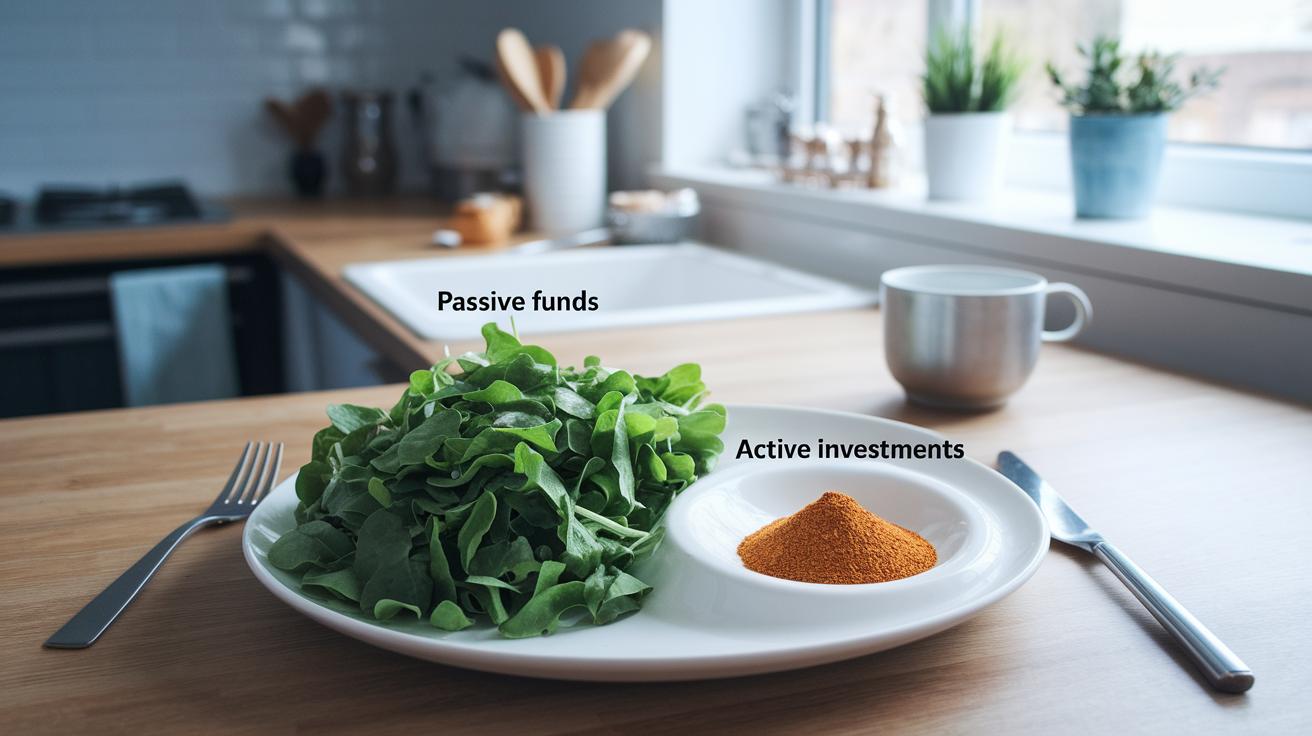
Many experts recommend focusing on passive index funds to form the core of your investment portfolio. This means using low-cost, widely spread funds to help grow your money over time while keeping things simple. Most investors put about 90-95% of their funds into these steady, passive investments and keep around 5-10% for more hands-on, active choices. Think of it like preparing a balanced meal: the main ingredients (passive funds) give you steady energy, and a little dash of spice (active investments) adds extra flavor and potential rewards.
It’s important to stick with your investments through all market ups and downs. When prices rise or fall, try not to make quick, reactive changes. Setting up automatic contributions can be a great help, imagine it like your garden getting watered on schedule, so your money has time to grow. Regularly checking and adjusting your investments is also key to keeping the balance just right. When you look at active managers, pay close attention to their past performance and the clear methods they use. It’s less about big promises and more about a proven, steady approach that stands up to different market conditions.
| Action | Description |
|---|---|
| Core Allocation | 90-95% in passive index funds for steady, low-cost growth. |
| Active Allocation | 5-10% reserved for high-risk active opportunities. |
| Automation | Set up automatic contributions to benefit from compounding returns. |
| Rebalancing | Review and adjust your portfolio periodically to maintain your target mix. |
For even more practical tips, check out the best investment strategies that blend these ideas.
Final Words
In the action, we broke down two main investing approaches, active and passive, by comparing methods, fees, performance, and time commitments. We weighed the benefits of diversified passive strategies against the focused efforts of active investing. The outline helped show how each style manages market risks and fits different investor lifestyles.
Combining clear strategies with careful analysis highlights why many choose a balanced mix of active vs passive investing for steady financial growth. Keep informed and invest with confidence!
FAQ
Active vs passive investing statistics
Active vs passive investing statistics show that most active managers underperform market indexes after fees, while passive funds have grown steadily, reaching trillions in assets due to lower costs and broad diversification.
Active vs passive investing research papers
Active vs passive investing research papers reveal that active funds incur higher fees and often fail to beat simple index benchmarks, while passive strategies provide low-cost, diversified exposure over the long term.
Active vs passive fund performance
Active vs passive fund performance comparisons indicate that a large percentage of active managers don’t beat market benchmarks, with passive funds generally delivering better long-term returns thanks to lower fees.
Active vs passive investing which is better
Active vs passive investing comparisons suggest that passive investing is generally more cost-efficient and less time-consuming, although active strategies might appeal to those seeking potential market outperformance in certain areas.
Active vs passive investing pros and cons
Active vs passive investing pros and cons show that active investing offers more control and potential for high returns but comes with higher fees and time commitment, while passive investing minimizes stress with low costs and built-in diversification.
Active vs passive investing Reddit
Active vs passive investing discussions on Reddit split opinions; many users prefer passive funds for their simplicity and lower fees, while others still find value in active strategies for personalized investment decisions.
What is active investing
What is active investing? It is a strategy where investors choose individual stocks or sectors and try to time the market, which requires ongoing research and active portfolio management.
Active and passive investment examples
Active and passive investment examples include active investing through tailored mutual funds or stock picking and passive investing through index funds or ETFs that track large market segments.
Is it better to invest in active or passive funds?
Is it better to invest in active or passive funds? It depends on your goals; passive funds are cost-efficient and low-maintenance, while active funds might offer opportunities for extra gains but require more time and incur higher fees.
What if I invested $1000 in S&P 500 10 years ago?
What if you invested $1000 in the S&P 500 10 years ago? Historical trends suggest that amount would have grown significantly due to the market’s long-term upward movement and reinvested dividends.
Is Warren Buffett an active investor?
Is Warren Buffett an active investor? He is known for active investing, making careful, research-based decisions to pick individual stocks and holding them over long periods.
How much is $1000 a month invested for 30 years?
How much is $1000 a month invested for 30 years? Regular investments over decades can build a substantial nest egg, thanks to compound returns, growing significantly beyond the total money contributed.