



Have you ever wondered if traditional banks might soon fade away? Picture a world where you handle your money directly, using clear and secure steps, kind of like checking out items at a grocery store.
Decentralized finance, or DeFi, relies on blockchain technology (a secure digital record that tracks transactions) to remove the middleman. This not only brings the fees down but also gives you a stronger grip on your money.
In this article, we explain how DeFi works by breaking down its benefits and potential risks in a simple way. We also explore how this new approach could unlock more financial freedom for you.
How Decentralized Finance Works: Foundations, Benefits, and Risks
DeFi, short for decentralized finance, uses blockchain technology, a way to record transactions on a digital ledger, to let people manage money without a bank or middleman. Instead of one boss controlling everything, the process happens on a network, kind of like an automated teller machine that handles your transactions without a person in the middle.
This system works by using smart contracts and peer-to-peer networks. Smart contracts are like little computer programs that automatically do what they promise once conditions are met. This means there’s no need for someone to check and approve each step. Peer-to-peer networks allow people to send money directly to each other. Think of it as sending cash to a friend with everything recorded securely so you both have a clear receipt of the exchange.
DeFi has a lot of cool benefits. For one, the system uses on-chain verification, so all records are open and hard to change. It also means lower fees since there are fewer extra steps, and it gives you more options with different digital money services. Some users even find that crypto assets can earn higher returns. But there are risks too. Prices can change quickly, and there’s a chance for scams or theft. For instance, a quick market drop has wiped out many yield farmers’ gains in a heartbeat.
| Benefit | Risk |
|---|---|
| Lower fees | Market volatility |
| Enhanced security | Smart contract vulnerabilities |
| Diverse financial services | Scam or theft threat |
| Potential for higher yields | Rapid yield erosion |
2. decentralized finance Ignites Financial Freedom

Blockchain technology is the foundation of decentralized finance. It uses a simple, open ledger where everyone can see each transaction. Once something is added to this ledger, it can’t be changed, just like writing with ink that never fades. This clear way of recording builds trust and makes it easy for anyone to check the details later.
Smart contracts play a big role in this system. They are like small computer programs that automatically do what they've been set up to do once certain conditions are met. Here are five key features of smart contracts:
| Key Feature | Explanation |
|---|---|
| Code immutability | Once the code is written, it stays fixed, like rules that can’t be changed on the fly. |
| Self-execution | The contract runs automatically once its conditions are met. |
| Gas fees | These are small charges paid to power the operations of the contract. |
| Auditability | Every action is recorded, so you can easily trace what happened. |
| Composability | They can be combined like building blocks to form more complex systems. |
New advances in distributed ledger technology make decentralized finance even stronger. They allow people to transact directly without a middleman. This peer-to-peer approach cuts out extra steps and helps things happen faster. Simple cryptographic security measures keep data safe and unchangeable, imagine locking your digital transactions with a secure code that only the right keys can unlock.
Core DeFi Protocols: Exchanges, Lending, and Liquidity Pools
DeFi uses smart contracts to give you financial tools without needing banks or middlemen. These tools do everything from instantly swapping tokens to lending money without the traditional bank setup. Everything follows global rules in a decentralized way, so the game stays fair.
Decentralized Exchanges
Decentralized exchanges, or DEXs, let you swap tokens directly with others. They use blockchain smart contracts that link buyers and sellers. Think of a DEX as a digital market where every trade is recorded on an open ledger, giving you complete control and reducing the chance of any single group interfering.
Automated Market Makers
Automated market makers (AMMs) use basic math formulas to set the prices of tokens on their own. They rely on something called the constant product formula, which keeps token prices balanced even when trade amounts change. Imagine mixing paint exactly so the color stays even, that’s how AMMs help maintain balance in prices.
P2P Lending Innovations
Peer-to-peer lending platforms let people lend or borrow money by using smart contracts as the middleman. This means you can get secured loans with collateral or even grab a flash loan, an ultra-fast loan that starts and ends in one transaction. Everything is tracked on the blockchain, making the process open and simple to follow.
Liquidity Pool Dynamics
Liquidity pools gather many assets together to keep trading smooth and give rewards to those who provide the funds. Smart contracts manage these pools using set rules. However, there are risks, like impermanent loss, where shifts in token prices might mean you lose out compared to just holding the tokens.
| Risk | How to Fix It |
|---|---|
| Inadequate liquidity management | Diversify asset pools |
| Smart contract vulnerabilities | Use audited and trusted protocols |
| Price slippage risks | Set trade limits and monitor the market |
| Impermanent loss in liquidity pools | Apply dynamic rebalancing strategies |
Investment Strategies in Decentralized Finance Platforms

DeFi gives you plenty of ways to grow your digital money. You can earn extra tokens simply by letting your funds work for you. There are clever ideas like yield farming, staking rewards, and automated lending that help boost your returns while keeping your risk spread out.
Yield Farming
Yield farming is when you provide liquidity to platforms such as Compound or Yearn. In return, you earn additional tokens as a reward. Think about it like planting a seed and later enjoying the harvest. For instance, you might add your assets to a decentralized platform and receive a share of the trading fees along with extra tokens.
Staking Rewards
Staking rewards mean that you lock up your assets, like ETH 2.0, to help secure blockchain networks. In exchange, you get rewards similar to earning interest, often shown as an annual percentage yield (APY), which is just a yearly rate of return. It’s like putting money in a savings account that pays you interest, while also helping to protect the system.
Automated Lending
Automated lending lets you use platforms like MakerDAO to lend out your crypto by using it as collateral. A smart contract (a self-operating program) takes care of the details, making sure everything runs smoothly and risks like liquidation are kept low. It works much like renting out an asset to earn regular income.
Portfolio Diversification
Mixing different strategies, such as lending, staking, and using liquidity pools, helps balance your crypto portfolio. This spread-out approach protects you if one area of the market faces issues.
| Tip | Description |
|---|---|
| Start Small | Invest only small amounts in each strategy to keep your risk low. |
| Review Regularly | Keep an eye on your investments and adjust them as needed. |
| Choose Trusted Platforms | Stick with audited and reputable protocols for safety. |
| Reinvest Rewards | Put your earned tokens back into your investments to boost growth. |
| Watch Market Trends | Check the market regularly to know the best time to shift your funds. |
| Keep Learning | Stay updated with new market insights and expert advice. |
Risks, Security, and Regulatory Landscape in DeFi
Smart contracts are the building blocks of decentralized finance, but even small coding errors can lead to huge losses. A tiny mistake can be exploited by hackers, costing millions. It's like leaving your door open, audits go over every detail to protect your money. For example, one line of poorly written code might let someone take control. That's why having experts review and audit these contracts is so important.
The market itself can be a bumpy ride. Prices can change in a flash, and what seems like a profit can vanish because of sudden swings. Plus, many places are still figuring out how to regulate decentralized finance. Without clear rules, there is a higher risk of scams or unexpected legal changes, which makes planning your next move harder.
Blockchain congestion is another challenge. When lots of people use DeFi at the same time, the network gets busy and fees can jump without warning. Imagine trying to drive during rush hour, the higher costs and slow speeds can really mess up your plans. It pays to be ready by planning ahead and setting up a safety net.
- Do detailed protocol checks to uncover potential weaknesses early.
- Look into insurance pools that might cover any losses.
- Spread out your investments to lessen the impact of any single failure.
- Stick with audited smart contracts that have a strong track record.
- Get involved in governance to have a say in how the system evolves.
Decentralized Finance vs Traditional Banking Models
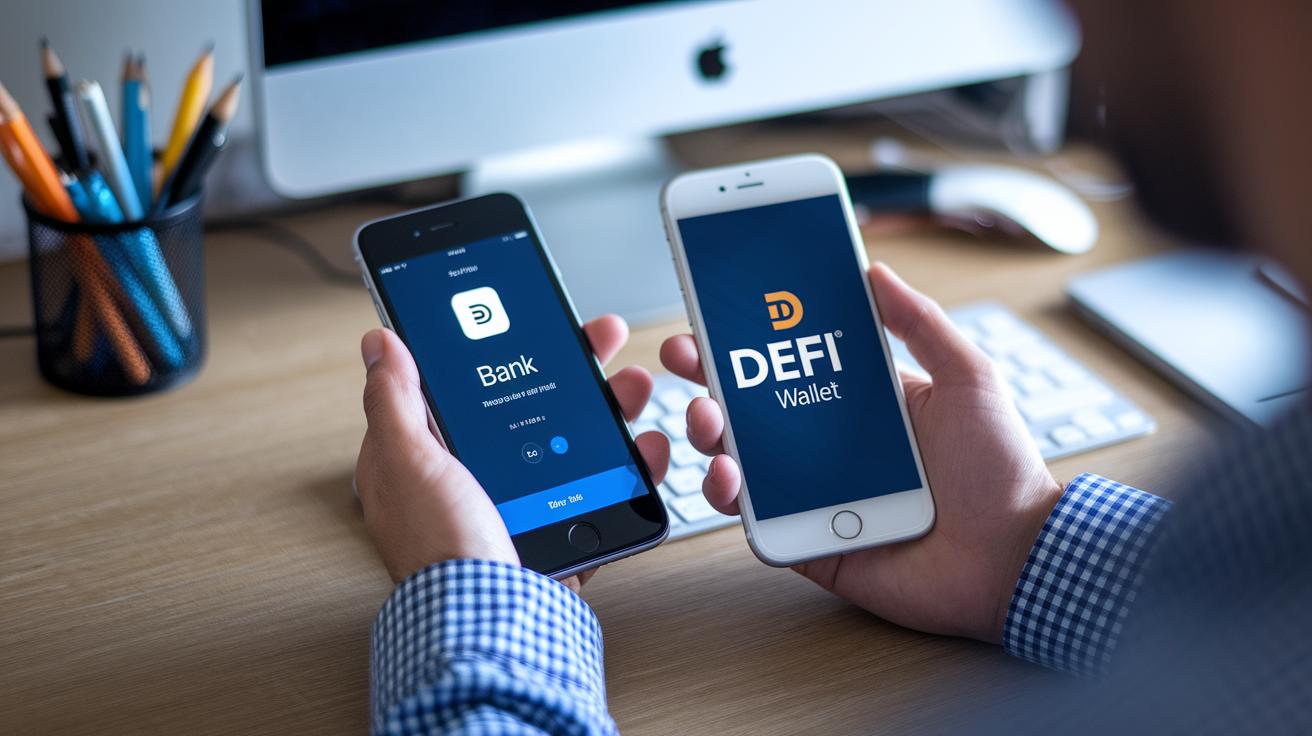
Traditional banks run things through a maze of middlemen like clearinghouses and other institutions. They require you to jump through many hoops, like proving who you are before you can access your money. This extra paperwork often makes transactions slower and less flexible. Decentralized finance, on the other hand, lets you handle your money directly with a non-custodial wallet. No middleman means you get a simpler, quicker, and more open way to manage your finances.
When it comes to costs, speed, and keeping things clear, the two models couldn’t be more different. Banks tend to charge higher fees and take more time because they use several approval steps behind closed doors. DeFi operates on a public digital ledger, processing transactions almost instantly at any time of day, usually with lower fees. You can watch your transactions in real time, which builds trust and makes it all very transparent.
| Service | Traditional Banking | DeFi Model |
|---|---|---|
| Loans | Central approvals with collateral requirements | Smart contract loans with instant execution |
| Payments | Transfers processed during business hours with KYC/AML checks | Open, on-chain transactions 24/7 |
| Asset Custody | Funds held in secure bank vaults | Non-custodial wallets with tokenized asset management |
Future Trends and Growth Projections in Decentralized Finance
Some experts think that by 2027, the money locked in decentralized finance could reach almost $500 billion. Both investors and users are keeping a close eye on how the market changes, which builds trust and brings fresh ideas to digital money.
New financial solutions built on blockchain technology are arriving quickly. Better wallet designs and clearer rules from regulators are speeding up the process. Innovations like on-chain derivatives (financial contracts on a blockchain that help manage risk) and liquid staking (a method that lets you earn rewards while keeping your crypto handy) are paving the way for everyday uses.
Also, more platforms are exploring asset tokenization, which means turning regular items into digital tokens anyone can trade. Recent trends in financial services show that different blockchains will soon work together easily through cross-chain interoperability, a way for systems to talk to each other.
Meanwhile, Layer 2 scaling solutions are expected to cut transaction fees and make processes faster. (Layer 2 scaling means extra systems on top of the main blockchain that help handle more transactions quickly.) This improvement is key for helping more people adopt the technology.
Together, these tech upgrades and clearer rules are paving the way for a digital finance future that is both efficient and transparent.
- Cross-chain bridges: They let
Final Words
in the action our article breaks down how decentralized finance works using blockchain to remove middlemen, powering smart contracts and peer-to-peer services. We explored its innovative protocols for exchanges, lending, and liquidity pools while weighing benefits against risks. Each section showed how these systems compare with traditional banking and pointed to what may come next for clear financial security. The insights shared here aim to help you make smart, informed decisions about your money. Enjoy moving forward with confidence in decentralized finance.
FAQ
What is decentralized finance?
The question “What is decentralized finance?” means that decentralized finance is a system using blockchain to offer financial services without banks, letting users make loans, trades, and payments directly.
What are some decentralized finance companies?
The question “What are some decentralized finance companies?” shows that many firms now operate in the DeFi space, providing platforms for lending, trading, and staking that run on blockchain technology without a central bank.
What discussions are held on decentralized finance Reddit?
The question “What discussions are held on decentralized finance Reddit?” means that Reddit communities host engaging talks on DeFi trends, investment tips, project updates, and user experiences, helping newcomers learn about the space.
What is decentralized finance crypto?
The question “What is decentralized finance crypto?” indicates that it refers to the use of crypto assets on blockchain networks to power financial services, enabling users to invest and transact without traditional intermediaries.
What are examples of decentralized finance?
The question “What are examples of decentralized finance?” highlights that examples include decentralized exchanges, lending platforms, yield farming protocols, and liquidity pools, all using smart contracts to function independently.
Where can I find decentralized finance PDFs?
The question “Where can I find decentralized finance PDFs?” means that you can look for downloadable guides, academic papers, and official DeFi project documents online that explain blockchain innovations and financial protocols.
Where can I find a decentralized finance course?
The question “Where can I find a decentralized finance course?” shows that many online platforms and educational sites offer courses covering blockchain basics, smart contracts, and investment strategies in the DeFi arena.
Can you make money with decentralized finance and is it a good investment?
The question “Can you make money with decentralized finance and is it a good investment?” means that while DeFi offers profit opportunities like yield farming and staking, it also comes with market risks, so careful planning and diversification are key.
What books can I read on decentralized finance?
The question “What books can I read on decentralized finance?” indicates that several texts explain blockchain technology, smart contracts, and DeFi investment strategies, providing clear educational insights for anyone interested.
What is the difference between DeFi and crypto?
The question “What is the difference between DeFi and crypto?” signifies that crypto refers to digital currencies, while DeFi focuses on decentralized financial systems built on blockchain that offer a range of services beyond simple transactions.