

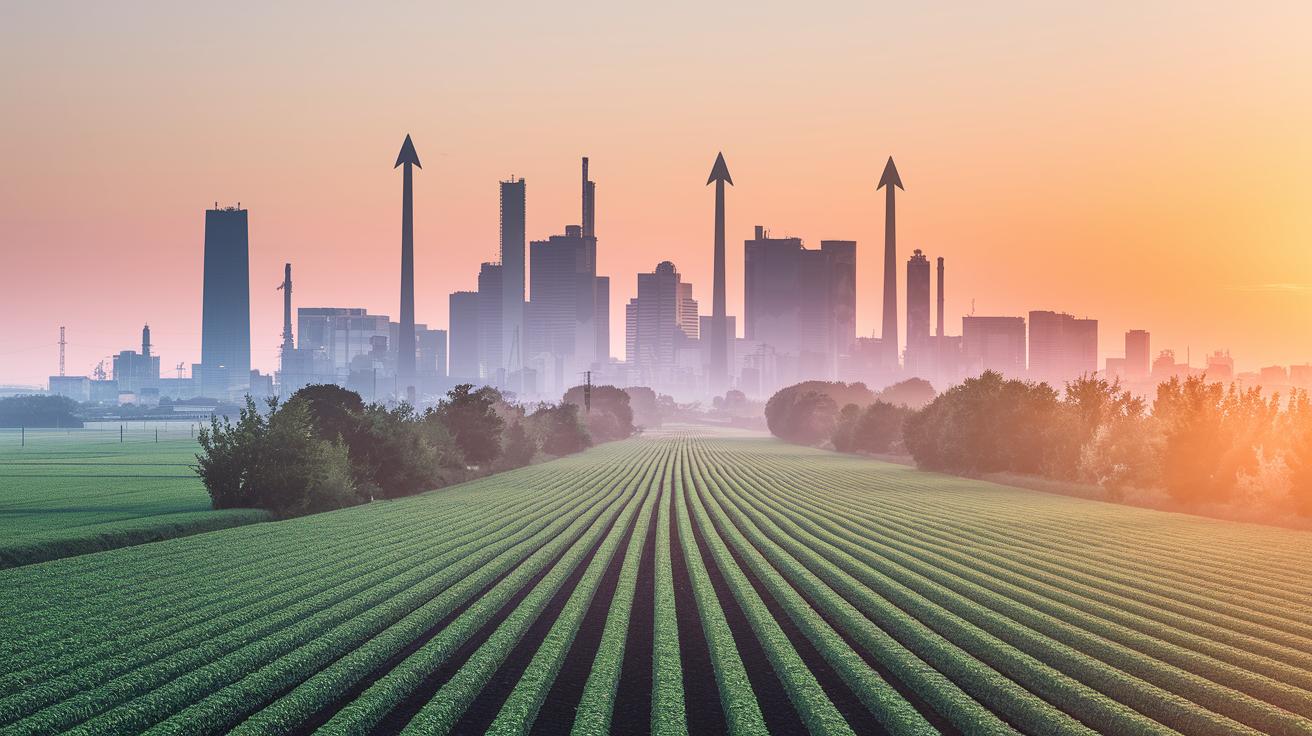

Have you ever thought about what pushes an economy forward? Think of economic growth like a garden that steadily fills with fresh produce each season. It means a country is making more products and services, with numbers that show the real picture. For example, a 3% annual boost might mean more job openings, improved tools, and larger markets. By looking at these simple figures, you can see how everyday progress shapes our lives.
Definition of Economic Growth: Inspiring Progress
Economic growth means a country’s real production is on the rise, measured by its real GDP or GNP over time. Think of it like a garden that blooms more each season, the variety and amount of produce grow steadily.
We measure this growth by comparing the real GDP from one year to the next. A 3% annual increase is often seen as a good sign. Real GDP adjusts for inflation, so it shows the real rise in production rather than just the change in prices. For example, if a country's real GDP grows by 3% in a year, that tells us the economy is getting stronger with better productivity and broader markets.
It’s important to note that economic growth is not the same as economic development. While growth focuses on the numbers and output, development looks at overall quality of life and welfare. Long-term growth is about steady progress built on better technology, higher productivity, and smart investments rather than short-lived spikes.
Key Metrics and Indicators Defining Economic Growth

When we talk about economic growth, we use several numbers that show different sides of a country's financial health. Relying on just one number might leave out important details. So, we examine a variety of indicators to see the full story of how the economy is doing.
| Indicator | Definition | How Measured |
|---|---|---|
| Nominal GDP | Total market value of all goods and services at current prices | Adding up all outputs at today’s prices |
| Real GDP | GDP adjusted for inflation, which means it removes the effects of rising prices | Calculated using constant prices from a chosen base year |
| GDP per capita | The average income or output per person in the country | Total GDP divided by the number of people |
| GNP | The total production by a country’s residents, both at home and abroad | Sum of outputs by those who own the production, no matter where produced |
| Productivity Rate | Measures how much each worker produces, showing efficiency | Ratio of total output to the number of workers |
These numbers aren’t just stats on paper. They help guide decisions about government spending and interest rates. Policy makers check these metrics to know when to change rates, adjust spending, or act during economic slowdowns. For example, if real GDP is dropping and workers aren’t as productive, a central bank might lower interest rates to encourage spending on new technology and infrastructure. In this way, keeping an eye on these indicators helps steer the economy toward steady and balanced growth.
Theoretical Frameworks Behind Economic Growth
The Solow growth model helps us understand how economies grow by looking at three main parts: building up capital, using labor, and having technology that comes from outside the system. Think of capital like buying new machines, improving roads, or even spending more on education and training. These investments create a stronger foundation for making goods and services. Labor is simply the people working and how well they turn raw materials into products. Picture a small factory that adds a new machine and suddenly makes more products – even small boosts in equipment can lead to big improvements in output.
Endogenous growth theory, on the other hand, directs our attention to what’s happening inside the economy. It shows us that growth can come from new ideas, more spending on research and development, and better skills in the workforce. When companies focus on creating new products or improving the skills of their workers, the benefits often spread to other parts of the economy. Imagine a business that starts a new project, which then lifts the entire industry, much like a teacher offering a great study tip that helps the whole class.
Policy makers often mix ideas from both models to make the economy stronger. They push firms to use the latest technology and invest in training programs. This mix of efforts can move the economy toward higher productivity and more efficiency. For example, lower borrowing costs might encourage a company to innovate, and that spark of creativity can set off a chain reaction of growth throughout the economy.
Historical Evolution of the Economic Growth Concept
In the early days, thinkers like Adam Smith saw that splitting up work could really boost how much was made. Think of a small workshop where each person masters just one task, this makes the work smoother and more productive.
After the war, a big shift occurred. The 1948 Marshall Plan is a clear example; huge investments helped kick-start Europe's recovery. Picture a community garden that suddenly gets plenty of fresh seeds and tools, turning empty plots into lively green spaces. This burst of resources helped rebuild and modernize economies coming out of conflict.
Later on, after World War II, experts started studying economic growth in more detail. In the 1950s and 60s, they looked beyond simple production numbers. They began to consider how institutions and changes in society played a role. It’s like moving from a basic map to a complete blueprint that shows both the physical parts and the environment where growth happens.
Primary Drivers of Economic Growth in Modern Economies
Technology is a major driving force in today’s economy. It lets companies produce more goods and services at lower costs and speeds up production in a very tangible way. New tools like automation and better communication systems mean businesses can streamline their work and tap into markets around the world. This progress often leads to more investment and fresh ideas, creating a cycle that keeps production levels rising.
Here are the main factors that boost growth:
- Technological innovation and research
- Investment in machines and buildings (sometimes called physical capital)
- Building skills through education and training (human capital)
- Improving how efficiently work is done
- Supportive government spending and monetary policies
But it’s not just about technology. Smart investments in equipment, infrastructure, and workforce skills build a strong foundation for growth. When workers become more productive, it lifts overall economic output over time. Government policies like spending on public projects or lowering interest rates help encourage business spending and consumer confidence. In the end, the mix of tech advancements, clear investments, and well-chosen policies creates a dynamic setting where economies can grow steadily and meet increasing demands.
Real-World Examples Illustrating Economic Growth Dynamics

Imagine two countries where things work a bit differently. Country A can produce five times more than Country B, but it only spends 25% of its resources on upgrading things like equipment and facilities. On the other hand, Country B invests 33% of its resources on those improvements. This simple switch in priorities can help a smaller economy grow faster. It shows that making smart, focused choices on upgrades can boost overall economic progress.
The US Great Recession from 2008 to 2009 is a lesson in what can happen when growth slows down. During that time, the economy dipped for two straight quarters. This downturn hit families and businesses hard, proving that even well-established economies can struggle when conditions aren’t right.
Central bank rate cuts are another handy tool in the economic toolbox. When banks lower the borrowing costs for companies, it makes lending easier. This extra boost lets businesses invest in new ideas and improve infrastructure. In many ways, these rate cuts help small steps and overall progress work together, giving the whole economy a much-needed push.
Final Words
In the action, we walked through the definition of economic growth. We explained it as an increase in a nation's real GDP or GNP over time, a key concept in measuring financial progress. The article broke down the core metrics, theoretical frameworks, historical shifts, and drivers of growth. Each section built on clear examples and data, making financial trends accessible for steady decision-making. Keep this insight in mind as you plan for a secure and growing financial future.