



Have you ever wondered if gold is still a safe bet when the economy feels shaky? Gold prices are climbing fast, and even seasoned investors are taking notice. Right now, gold is hitting around $3,800 per ounce, and that has many people rethinking their investment plans.
In times of uncertainty, gold can seem like a safe place to park your money. Recent market signals point to a growing interest in gold, making it an option worth considering if you want a stable spot in your portfolio.
Read on to see why these changes in gold prices might matter for your financial future.
Gold Investment Trends: Current Market Snapshot
Gold recently reached new heights, trading around $3,800 per ounce and showing an 83% return since 2024. This strong climb has caught the eye of investors everywhere, especially since gold is seen as a safe bet when markets are a bit shaky.
By mid-September 2025, gold prices had jumped with a 42% gain for the year so far, topping the 27% increase seen in 2024. In February, gold hit $2,900, then climbed to $3,500 in April and about $3,700 in September. These milestones show a steady performance that attracts both traditional and global buyers. Plus, gold tends to do well when the US Dollar Index (a measure of how strong the dollar is) falls.
- Trading at an all-time high of $3,800 per ounce.
- A year-to-date gain of 42% in 2025 compared to a 27% rise in 2024.
- Key price points include $2,900 in February, $3,500 in April, and $3,700 in September.
- A strong inverse link with the US dollar makes gold more appealing when the dollar weakens.
- Its reputation as a safe-haven asset remains solid during uncertain times.
These numbers show an exciting time for gold investors. The upward momentum and clear milestones remind us that a patient investment strategy can offer some protection during tough economic times. For anyone keeping an eye on live updates, these trends might help decide when to tweak your investment plans as the global economy shifts.
Gold Investment Trends: Historical Performance and Safe-Haven Role

Gold has a solid reputation for steady returns, usually earning about 4% to 6% each year. This reliable growth gives investors comfort during market ups and downs, making gold a favorite when looking for financial stability.
For the past 20 years, gold has done better than some big names like the S&P 500 and the Bloomberg Barclays U.S. Aggregate Bond Index. Its steady performance and role in balancing a portfolio help set it apart, especially when other investments might stumble during rough economic times.
Central banks around the world have been steadily buying gold for 15 years straight. In 2024, net demand shot up to over 1,000 tonnes, much higher than the average of 490 tonnes from 2014 to 2021. This jump shows that, in times of economic and political stress, many see gold as a safe way to protect their wealth.
Gold Investment Trends: Macroeconomic and Geopolitical Drivers
Persistent inflation and near-zero interest rates can make it hard for saving money in a bank to keep up with everyday expenses. Many investors see gold as a solid choice in these conditions. Think of it as grabbing a sturdy umbrella on a rainy day, gold helps protect your purchasing power when cash earnings are low.
Global defense spending is on the rise, which in turn hikes the cost of raw materials and labor. At the same time, US tariffs, like 50% on goods from India, 15% on those from the EU, 25% on Mexico, plus similar measures for 14 other nations, add to market ups and downs. It’s a bit like a sports team that has a string of tough games; every move counts, and the unpredictability makes investors lean toward safer options. For more insight, check out our detailed analysis in our financial market volatility and trend analysis.
A weakening US dollar also plays an important role. As the greenback loses value, international buyers find gold even more appealing. A lower dollar makes gold relatively cheaper for them, boosting its charm when market conditions get shaky.
Gold Investment Trends: Forecasts from 2025 to 2030
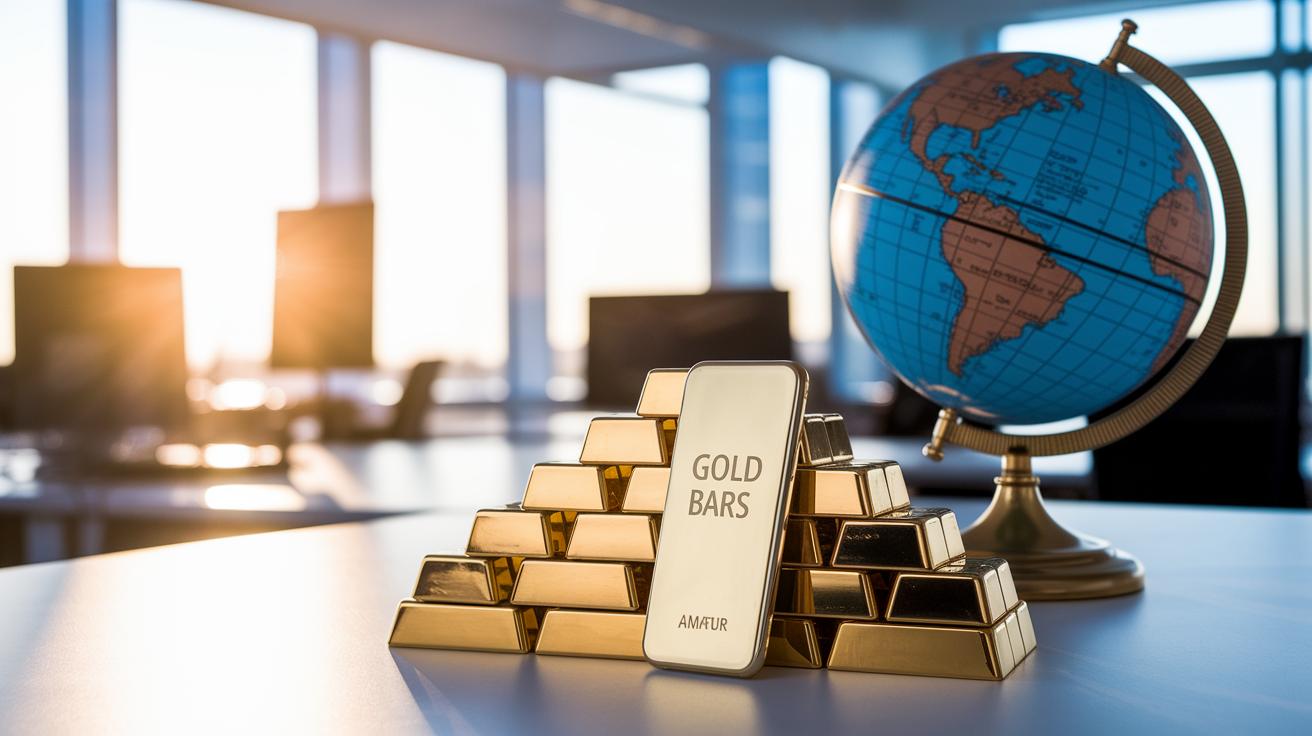
Looking ahead to 2025, experts expect that gold could edge up slightly, by about 0 to 5% in the second half of the year. This might mean an annual return of around 30 to 35%. However, if something unexpected hits the market, gold prices could jump up by 10 to 15%, while a break in global tensions might see prices dip by 12 to 17%. These numbers give us a quick look at how gold might react to changes in the economy and world events. For regular updates, you can check out the economic outlook for 2025.
Between 2026 and 2030, gold is set to hold its own against traditional picks like the S&P 500. This period should see gold not only offering consistent returns but also acting as a solid shield against inflation (when the cost of goods goes up). Experts point to ongoing inflation pressures and a move away from relying on the US dollar as reasons for this optimistic view. Plus, with world uncertainties and market ups and downs, many investors are expected to keep turning to physical gold, often in the form of bullion (gold bars or coins) for stability. This rising demand might even push investors toward more daring yet smart moves in the market.
Over the long haul, these trends suggest that gold will continue being a key player in well-rounded investment strategies. Its status as a reliable safe-haven and potential for steady gains can help balance out portfolios, especially when markets feel unpredictable.
Gold Investment Trends: Institutional and Retail Demand Dynamics
Central banks have been buying large amounts of gold over the past 15 years. In 2024, they purchased over 1,000 tonnes, a big increase compared to the 490-tonne average from 2014 to 2021. Looking ahead to 2025, experts expect them to buy around 900 tonnes. This steady buying shows how appealing gold is during rough market times, as banks use it to mix up their reserves and guard against instability.
| Source | 2024 Volume (tonnes) | 2025 Projection (tonnes) | Notes |
|---|---|---|---|
| Central Banks | Above 1,000 | Around 900 | Steady long-term accumulation |
| Gold ETFs | N/A | N/A | Assets under management up 41% to $383B; holdings increased by 397 tonnes |
| COMEX Futures | N/A | N/A | Non-commercial positions hit record levels; private holdings near 49,400 tonnes |
Everyday investors and speculators are also showing strong interest in gold. Gold ETFs provide a simple way to invest without the need to store physical gold. In 2024, record non-commercial positions in COMEX futures and options confirmed that trading in gold is really active. Moreover, private ownership of gold bars and coins grew by about 3% year-over-year, now reaching nearly 49,400 tonnes. Together with the heavy buying by institutions, these trends prove that both major players and regular investors see gold as a smart, safe choice in uncertain times.
Gold Investment Trends: Comparative Analysis and Portfolio Integration

Over the past year, gold has truly shined. It’s been the star performer, outpacing U.S. stocks and bonds by a wide margin. While stocks and bonds can be all over the place, gold offers a steady, reassuring presence in uncertain times.
Many investors add gold to their mix because it doesn’t follow the same ups and downs as big stock indexes like the S&P 500. This means gold can act as a cushion when market conditions get rough. Plus, it comes without those extra carrying costs that bonds sometimes bring, especially when yields are near historic lows. In a way, including gold is like adding an extra layer of insurance to your portfolio.
Around the world, people are leaning towards investments that offer both safety and strength. Gold has proven itself time and again as a reliable, safe haven during market downturns. As economic conditions change, more investors are turning to gold to protect their financial future while still keeping an eye on growth opportunities.
Final Words
In the action, we explored gold hitting record highs with impressive returns and key price milestones. We touched on how gold’s past performance and steady buying spur from central banks maintain its safe-haven appeal. We also looked closely at economic pressures and forecasts shaping gold investment trends. These insights help make sense of today’s numbers and offer clear guidance for those wanting live rate updates and smart moves in gold investment trends. The outlook is bright, and informed choices pave the way for a secure future.
FAQ
Q: What are the gold investment trends for 2025?
A: Gold investment trends for 2025 show a robust outlook driven by central bank buying and international demand, with market signals hinting at modest rate fluctuations amid ongoing global economic pressures.
Q: What are the gold investment trends today?
A: Gold investment trends today reflect record highs near $3,800/oz and strong year-to-date gains, influenced by a weakening US dollar and steady international buying, suggesting a solid market performance.
Q: What are the gold price predictions for the next 5 years?
A: Gold price predictions for the next 5 years indicate gradual growth and resilience, as steady demand combined with inflation concerns and market instability positions gold as a consistent safe choice.
Q: What are the gold demand trends for Q3 2025?
A: Gold demand trends for Q3 2025 are expected to remain strong due to ongoing central bank purchases and heightened investor interest, offering stability amid broader market uncertainties.
Q: How is gold demand expected to perform in 2025?
A: Gold demand in 2025 is set to stay robust due to institutional interest and global economic uncertainty, reinforcing gold’s status as a trusted asset during volatile periods.
Q: What are the gold demand trends for Q2 2025?
A: Gold demand trends for Q2 2025 point to an upward pattern as supportive market conditions and ongoing inflation pressures bolster investor confidence in gold.
Q: What are the gold demand trends for Q1 2025?
A: Gold demand trends for Q1 2025 suggest steady growth driven by confident central bank acquisitions and increasing appeal among investors seeking a reliable market hedge.
Q: Will gold rates decrease in the coming days?
A: Gold rates may experience short-term dips, but overall factors such as international buying trends and safe-haven appeal are expected to keep prices resilient in the near term.
Q: Is it a good time to invest in gold now?
A: Current market signals, strong year-to-date gains, and gold’s role as a secure asset make it an appealing option for many investors, though personal risk tolerance should guide your decision.
Q: Is the gold price expected to fall?
A: While minor short-term corrections are possible, long-term market factors and balanced global economic pressures suggest that gold prices are likely to remain on an upward trend.
Q: What are the key trends in gold investment?
A: Key trends in gold investment include record-high trading prices, significant year-to-date gains, and strong demand from both central banks and private investors, reinforcing gold’s safe-haven role.
Q: What if I invested $1000 in gold 10 years ago?
A: A $1000 investment in gold 10 years ago would have appreciated significantly, reflecting gold’s steady performance and its historical reliability as a long-term store of value.