

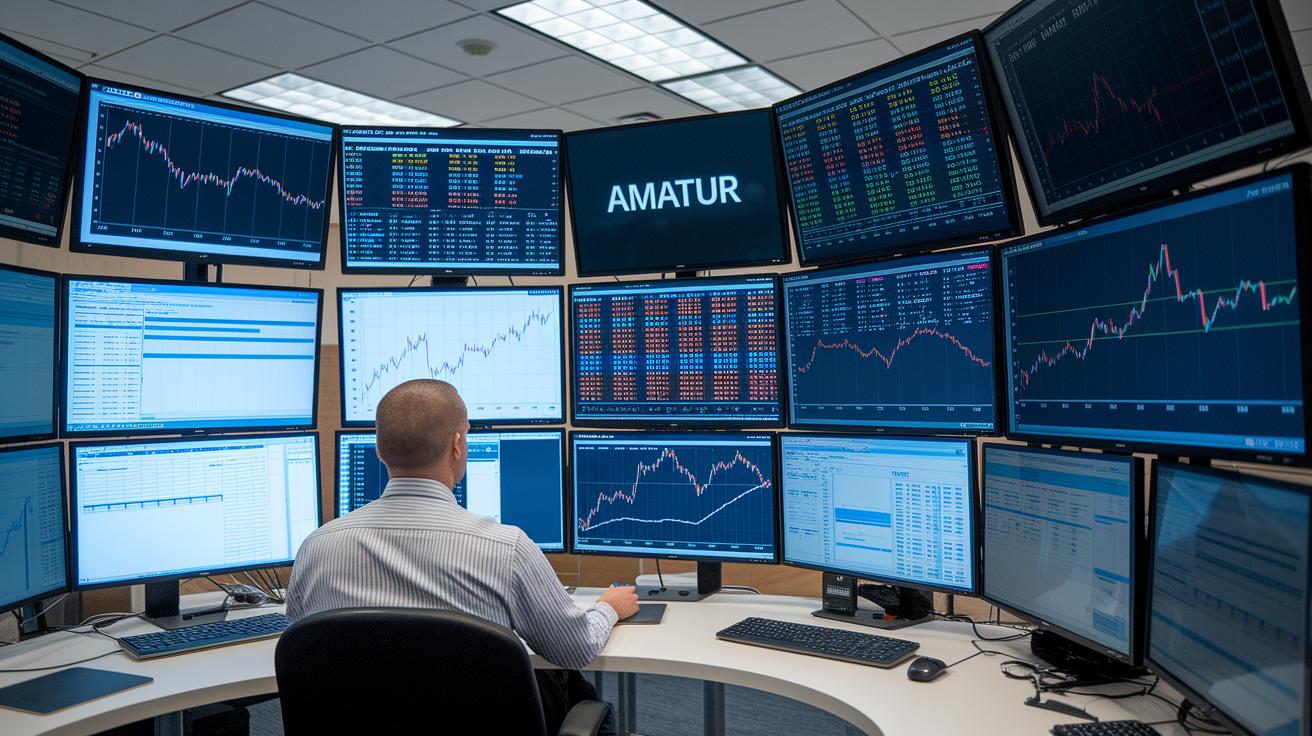

Ever wonder how using math can sometimes work better than trusting your gut when trading? Quantitative trading relies on solid math and speedy computers to find opportunities before they become plain to see.
Imagine it like having a supercharged calculator that quickly turns raw numbers into clear trading steps. These smart tools sort through heaps of information about stocks, bonds, and currencies to pick the perfect moments to act.
By removing emotions from the mix, these systems help you capture small gains every time the market shifts. Curious to see how these clever strategies boost modern trading? Keep reading!
Core Principles of Quantitative Trading
Quantitative trading is all about using math and computer programs to decide when to buy or sell things like stocks, bonds, and currencies. It gathers lots of data, like how prices change, how much is being traded, and even details about the weather, to discover trends. Think of it as a super-fast helper that spots chances to trade before a human might even notice. This method cuts out the usual gut feelings that can sometimes cloud judgment and can even pave the way for starting your own fund with extra backing.
At its heart, quantitative trading relies on three main parts: collecting data, building models, and executing trades automatically. Firms pull in data from many different places and then use statistical tools, basically, methods to understand numbers, to predict what might happen next. Once the models are ready, they are programmed to make trades in just a fraction of a second, which no human could do. By making decisions based solely on the numbers, it keeps things fair and focused.
This approach also helps make the market more efficient and liquid. Quick, computer-driven choices can help narrow the gap between buying and selling prices and even out price shifts, which is good for everyone involved. The automated systems keep matching orders and trading all the time, which helps the market stay calm and stable. Plus, by constantly learning from real trade results, these systems get even better over time, ensuring that prices stay fair and the market flows smoothly.
Quantitative Trading: Smart Models Drive Gains

Quant strategies come in many flavors, using smart tech and data to help make choices in computer-run markets. Companies create these models to grab quick market gaps or ride on market trends using advanced computer programs. Here are the five common strategies many traders use:
- Statistical arbitrage – This looks for quick price differences between similar assets to make a profit.
- Market making – This strategy earns small profits by continuously buying and selling to benefit from the gap between bid and ask prices.
- High-frequency trading – Using super-fast systems, this method makes trades in just milliseconds, catching very short opportunities.
- Trend following – This approach uses past price action to catch longer market moves.
- Mean reversion – This strategy bets that prices will return to their average after making big moves.
Building these strategies follows a clear, step-by-step cycle. It starts with forming a good trading idea from watching the market. Then, you collect both historical and current data to test that idea. Next, you turn raw data into clear signals that help with decisions. After that, you fine-tune the model to fit real market conditions. Then comes putting the model to work in live trading, and finally, you check the results to see what can be improved.
Creating a strong quant strategy never really ends. Once the model is live, companies continually check how well it makes profits while keeping risks low. With every trading session, new data can show where to tweak the model or reveal surprises. This blend of careful planning and real-world testing is what makes smart models work today and keeps them ready for tomorrow’s market changes.
Data Analysis and Backtesting in Quantitative Trading
Good data is at the heart of any strong quantitative trading plan. Before trying out a strategy, traders spend time cleaning up historical data by fixing errors and filling in missing parts. This means checking every detail and keeping everything in a consistent format so trading models can easily read it. Think of it like gathering fresh ingredients before cooking a meal; every item needs to be just right. When the data is clean, traders can get a clear picture of profitability, risks, and delays, key points in understanding how a strategy might work in the real world.
| Framework | Language | Key Feature | License |
|---|---|---|---|
| QuantConnect | Python/C# | Cloud backtesting | Free & Paid |
| Zipline | Python | Event-driven API | Open-source |
| Backtrader | Python | Live & historical | Open-source |
When it comes to reading backtest results, careful observation is key. Traders check numbers like the Sharpe ratio (a simple way to see if risk and reward are balanced), maximum drawdown (the biggest drop from a peak), and alpha generation (extra returns beyond a standard benchmark). A high Sharpe ratio usually means the strategy handles risk well. However, it’s important to avoid overfitting, where a model looks great with old data but falls apart in real trading. Regular reviews and updates with new data help keep the strategy strong and ready for the unpredictable swings of the market.
Risk Management Techniques in Quantitative Trading

Strong risk controls are essential for algorithmic funds. When trading models work in milliseconds, even a tiny mistake can cost a lot. Risk management acts like a safety net, keeping automated trading systems in check and protecting your portfolio when market conditions suddenly change. Using data-based risk tools helps traders spot potential weaknesses while keeping a careful balance between reward and risk.
- Value-at-Risk (VaR) calculations: This tool measures potential losses. (Learn more at this risk management techniques link: https://dealerserve.com?p=2041)
- Stress testing: Simulating extreme market conditions to see how systems respond.
- Real-time limits: Watching live trades to control exposure as it happens.
- Scenario analysis: Examining how different events can affect trades.
- Automated kill switches: Stopping trading automatically if risky levels are reached.
Keeping risk models up to date is key for long-term success. After each trading session, teams review detailed performance data to spot any issues or emerging patterns. These insights allow them to refine models, adjust control settings, and ensure that risk practices grow along with the market. This ongoing process of review and improvement helps keep the trading environment stable and makes sure the systems are sharp and ready for real-world events.
Programming Languages and Platforms in Quantitative Trading
When you're diving into quantitative trading, the tools you choose really depend on the job at hand. Python is a favorite because it comes packed with libraries that help with data analysis, trying out ideas, and testing strategies using past market data. R and MATLAB shine when you need to dig into detailed statistics. And if speed is your top priority, C++ is the go-to for turbocharged performance. On top of that, open-source platforms like QuantConnect and the Zorro automation system give you the flexibility to experiment and get community support as you build your trading models.
Here are some of the main players:
- Python – A user-friendly language loaded with libraries to support every stage of your project.
- R – Perfect for deep statistical work, offering packages that simplify complex data analysis.
- C++ – Renowned for its performance, making it ideal for trading systems that require lightning-fast speed.
- MATLAB – Popular for numerical modeling and testing because of its strong computational tools.
- Julia – An up-and-coming language that blends speed with clarity, perfect for modern algorithm development.
Keeping your work organized is key. Version control tools like Git help you manage code changes smoothly, and cloud platforms provide scalable resources and a seamless environment for backtesting your models.
Career Paths and Education in Quantitative Trading

If you're eyeing a career in quantitative trading, it all starts with a strong education. You might study math, statistics, physics, computer science, or financial engineering. Most jobs in this field ask for at least a bachelor's degree, and having a master’s degree can really help. By learning programming and data analysis and getting to know basic financial ideas (how money and markets work), you'll be well-prepared for this data-heavy career.
Certification and Training Programs
If you want to take your skills further, consider looking into certification programs like the Certificate in Quantitative Finance (CQF). This program covers key topics such as math basics, financial theory, Python programming, machine learning (techniques that help computers learn from data), managing risks, and building trading algorithms. Plus, there are top online courses that offer interactive lessons and hands-on projects that feel just like real market situations. These credentials not only boost your resume but can also open the door to top quant positions.
Recommended Textbooks and Self-Study
- "Econometrics in Practice" by John Doe: This book explains practical econometric methods used in finance.
- "Time Series Essentials" by Jane Smith: A clear guide to studying changes in asset and derivative prices over time.
- "Machine Learning for Finance" by Alan Brown: Discover friendly, non-linear machine learning strategies applied to finance.
- "Optimization Techniques" by Maria Green: Learn basic math methods used for balancing investments and managing risk.
- "Market Microstructure Explained" by David Black: Understand the inner workings of trading and what drives market behavior.
Finally, remember that networking and real-world experience can make all the difference. Talking to industry professionals, finding internships at leading firms, and even joining quant competitions can help sharpen your skills. These activities offer a closer look at what it's like to work as a quant analyst and give you a leg up in the highly competitive world of quantitative trading.
Final Words
In the action, we walked through core ideas from data-driven models to risk controls and tech tools that boost trade efficiency. We broke down strategy types, backtesting steps, essential risk practices, and programming basics in a clear, friendly way.
We also touched on what it takes to start a new career path in this field. Our chat about quantitative trading shows how these smart techniques can improve market efficiency and build a secure, bright future for your financial growth.
FAQ
What is a quantitative trading course?
A quantitative trading course teaches how to use math and computer models to analyze markets, build trading strategies, and manage risks. It helps boost skills in automated, data-driven trading.
What is a quant trader’s salary?
A quant trader’s salary reflects their expertise in data-based strategies and market analysis. Earnings vary by experience, firm size, and performance, often making the field highly competitive.
What is a quantitative trading app?
A quantitative trading app provides digital tools to execute and monitor trades automatically. It offers real-time data analysis and trade management to streamline algorithmic investment strategies.
What is a quantitative trading book or PDF?
A quantitative trading book or PDF explains the theories and practical techniques behind algorithmic trading. It typically covers model building, data analysis, and risk management for those looking to learn more.
What are people discussing about quantitative trading on Reddit?
Discussions about quantitative trading on Reddit involve sharing community insights, resource tips, and personal experiences. These forums can offer valuable advice and real-world perspectives on the field.
What are quantitative trading jobs?
Quantitative trading jobs require strong skills in math, programming, and financial analysis. Professionals in these roles develop and execute automated trading strategies using data-driven models.
What is a quantitative trading platform?
A quantitative trading platform is software that helps traders build, test, and run automated trading strategies. It offers features like data analysis, backtesting, and real-time risk monitoring.
What is an example of a quantitative trade?
An example of a quantitative trade is using statistical models to identify small pricing differences between securities and executing a trade to profit when those differences adjust.
Is quantitative trading safe?
Quantitative trading is safe when proper risk controls and robust models are in place. While technology reduces emotional bias, market uncertainties still exist, making ongoing risk management essential.
Is quantitative trading hard?
Quantitative trading is hard because it demands a strong grasp of math, programming, and market analysis. Nevertheless, with study and practice, its systematic approach makes the field approachable for dedicated learners.