



Ever worried that your project might fall apart because of an unexpected risk? A risk matrix does more than just crunch numbers, it helps shine a light on potential dangers and makes daily uncertainties less overwhelming. Think of it like checking the weather: the grid shows you which issues are more likely to happen and how big their impact might be. This simple tool lets teams sort problems by urgency, so everyone knows what needs attention most. In a world where every decision matters, a risk matrix helps you assess risks with confidence and keeps surprises at bay.
Understanding Risk Matrix: Definition, Purpose, and Key Benefits
A risk matrix is a simple chart that shows us which project risks might cause trouble. It pairs the chance something might happen with how big the issue could be, making it easy to spot problems that need quick attention. Imagine a project manager using a 5×5 grid to figure out which issues could throw off an important deadline.
How does it work? Think of it like a two-sided scale. One side shows the likelihood of an event happening, while the other estimates its potential impact. For example, you might use a scale from 1 to 5, where 1 means a rare or small problem and 5 means an almost certain, serious issue, making risk checks as straightforward as checking the weather.
The benefits are clear. A risk matrix helps teams decide where to focus their efforts, plan more carefully, and know who is responsible for each issue. It encourages everyone to work together to fix problems before they grow. If you'd like to dive a little deeper, check out financial risk analysis here: https://moneyrepo.com?p=997
Anatomy of a Risk Matrix: Axes, Scales, and Color-Coding
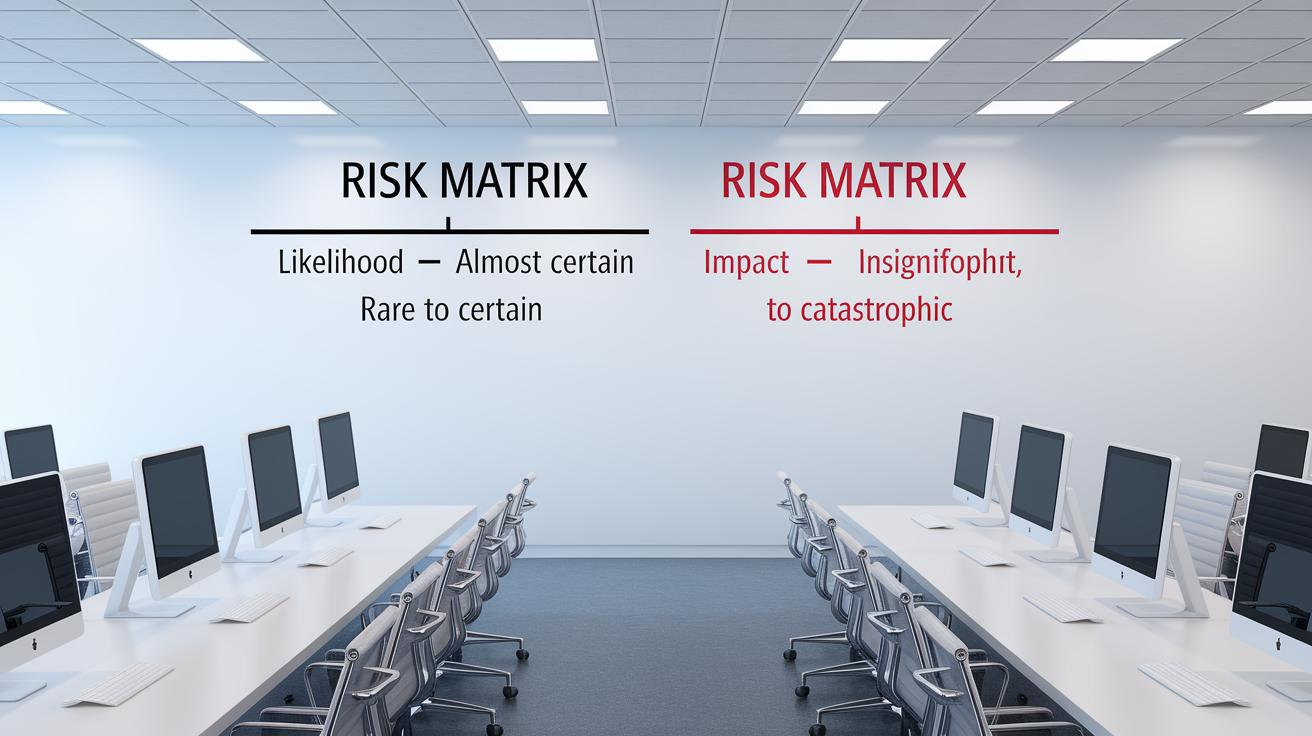
A risk matrix uses two simple lines to show different risk levels. On the horizontal line, you see how likely an event is to happen, it goes from Rare to Almost Certain. The vertical line tells you how big the impact might be, starting at Insignificant and moving up to Catastrophic. Together, these lines help you quickly see and rate threats.
| Scale Value | Likelihood Description | Impact Description |
|---|---|---|
| 1 | Rare | Minor |
| 2 | Unlikely | Slight |
| 3 | Possible | Moderate |
| 4 | Likely | High |
| 5 | Almost Certain | Catastrophic |
When you design a risk matrix, keeping the layout clear really helps. Making sure each cell is the same size means the information looks good on any screen. Plus, using strong color contrasts, green for low risk, yellow for moderate, and red for high, makes it easy to see where the dangers lie. Labeling everything clearly on both axes helps you rate risks accurately. This way, a risk matrix becomes a handy tool for quick visual checks and smart, data-based decisions.
Step-by-Step Guide to Creating a Risk Matrix
Step 1: Identify and List All Risks
Start by gathering every potential risk you can think of from your project details, goals, resources, and team feedback. This brainstorming session is like making a list of all the ingredients before you start cooking. For instance, a team member might ask, "What if we don't get our supplies on time?" That question can help you spot risks like delays, cost overruns, or technical hiccups.
Step 2: Define Likelihood and Impact Criteria
Next, decide how probable each risk is and how much of an effect it might have. You can use simple terms like Low, Medium, or High, or assign numbers from 1 to 5. Imagine it like comparing a light drizzle to a heavy downpour. These clear ratings make it easy for everyone to understand why some risks matter more.
Step 3: Score Risks Using a Matrix Evaluation Method
Now, combine your likelihood and impact ratings to give each risk a score. This scoring is like checking a weather map, low scores signal minor issues, while high scores point out serious concerns that need quick action. It’s a clear way to see which risks deserve your attention first.
Step 4: Prioritize Risks and Plan Controls
Finally, sort the risks based on their scores and come up with a plan to manage them. For risks with high scores, consider actions like revising project timelines, adding extra safety checks, or scheduling regular reviews. This step ensures everyone knows what to do when a real problem strikes.
Risk Matrix Drives Confident Risk Assessment
For smaller projects with only a few risk factors, a 3×3 matrix works great. It lays out three levels of likelihood and three levels of impact in a simple grid. Think of it like drawing a quick map that shows where minor risks might pop up on a busy day.
When projects become more complex and stakes are higher, a 5×5 matrix offers extra detail. This tool splits both the chance of a problem and how badly it might affect you into five parts. It’s similar to turning a simple sketch into a detailed blueprint that helps your team spot subtle differences between risks.
Take one tech startup, for example. They used a 5×5 grid in Excel to dig into cybersecurity issues, turning potential problems into clear, actionable steps. In another case, a construction team used a free template to track safety hazards from the ground up. Downloadable templates in Word and Excel, along with interactive spreadsheet tools, let teams tailor the risk matrix for their specific needs. Imagine updating your risk matrix on the fly, changing numbers and colors as new data comes in, making risk management a dynamic part of everyday planning.
Best Practices for Managing and Updating Your Risk Matrix
Keeping your risk matrix fresh is like doing routine check-ups to stay ahead of new challenges. When big shifts, such as changes in regulations or events like COVID-19, come along, it’s a clear sign to update your plan. This helps your team quickly adjust how likely risks are and how big their impact might be. Following a regular review schedule means you catch changes early and fine-tune your risk priorities. If you’re curious for more details, check out some of the latest tips in risk management strategies at https://moneyrepo.com?p=1023.
Using tools like an Excel analysis grid or a smart interactive spreadsheet can make tracking these updates surprisingly simple. These tools help you manage different versions and keep a neat record of every change made over time.
And then there’s scenario planning. Running through “what-if” situations lets you test out various risks to see how they could shake things up. This hands-on approach not only sharpens your risk scoring but also shows how different scenarios might change your focus. Regularly practicing these exercises means your team can quickly adapt, ensuring project stability and a smoother ride through uncertain times.
Common Errors in Risk Matrix Analysis and How to Avoid Them

Many people fall into the trap of oversimplifying their scales. When you use just a few levels, you might miss important differences. For example, treating a small hiccup as if it were a major fault can lead you to make weak risk decisions.
Another common error is overlooking rare events that can have a huge impact. If you ignore a risk because it doesn’t seem likely, its severe consequences might surprise you. This can leave your projects vulnerable to sudden, expensive setbacks.
It’s also a problem when risks are scored inconsistently or when you don’t get enough input from all stakeholders. If the ratings vary too much, it becomes tough to reliably compare different risks, which can create misunderstandings.
To solve these issues, consider using a control analysis approach. Combining a probability mapping technique (a method to show how likely events are to happen) with a consequence mapping method (a way to show the impact if they do) gives you a more detailed view of each risk. A customizable evaluation grid keeps the scoring uniform, so every risk is measured and managed for its true impact.
Final Words
In the action, this article explored how a risk matrix helps simplify complex financial threats while offering a clear way to score risks using both qualitative and quantitative methods. We broke down the matrix’s layout, shared templates for everyday use, and outlined steps for creating and reviewing your own model. The discussion also addressed common mistakes and ways to correct them. Embracing this risk matrix could empower you to sharpen your decision making and boost your financial security. Stay informed and proactive for a secure future.